
HDMI 2.2 Doubles Bandwidth to 96Gbps: Do You Need a New Cable?
HDMI 2.2 is the latest major update to the HDMI specification, doubling maximum bandwidth from 48Gbps to 96Gbps and introducing a new Ultra96 HDMI Cable for the highest-bandwidth connections.
The HDMI Forum formally released the HDMI 2.2 specification on June 25, 2025, following its initial announcement earlier that year. The new standard is aimed at increasingly demanding displays, gaming systems, professional AV equipment and future high-resolution video applications.
For most current TVs, monitors and game consoles, however, the arrival of HDMI 2.2 does not mean an immediate cable upgrade is necessary.
PCCables.com currently carries 48Gbps Ultra High Speed HDMI cables for today’s HDMI equipment, including 4K120 and 8K60 applications. As HDMI 2.2 hardware begins reaching the market, understanding when 96Gbps and Ultra96 actually matter can help determine whether an upgrade is necessary.


See our HDMI selection here!
What Is New With HDMI 2.2?
The headline change is bandwidth.
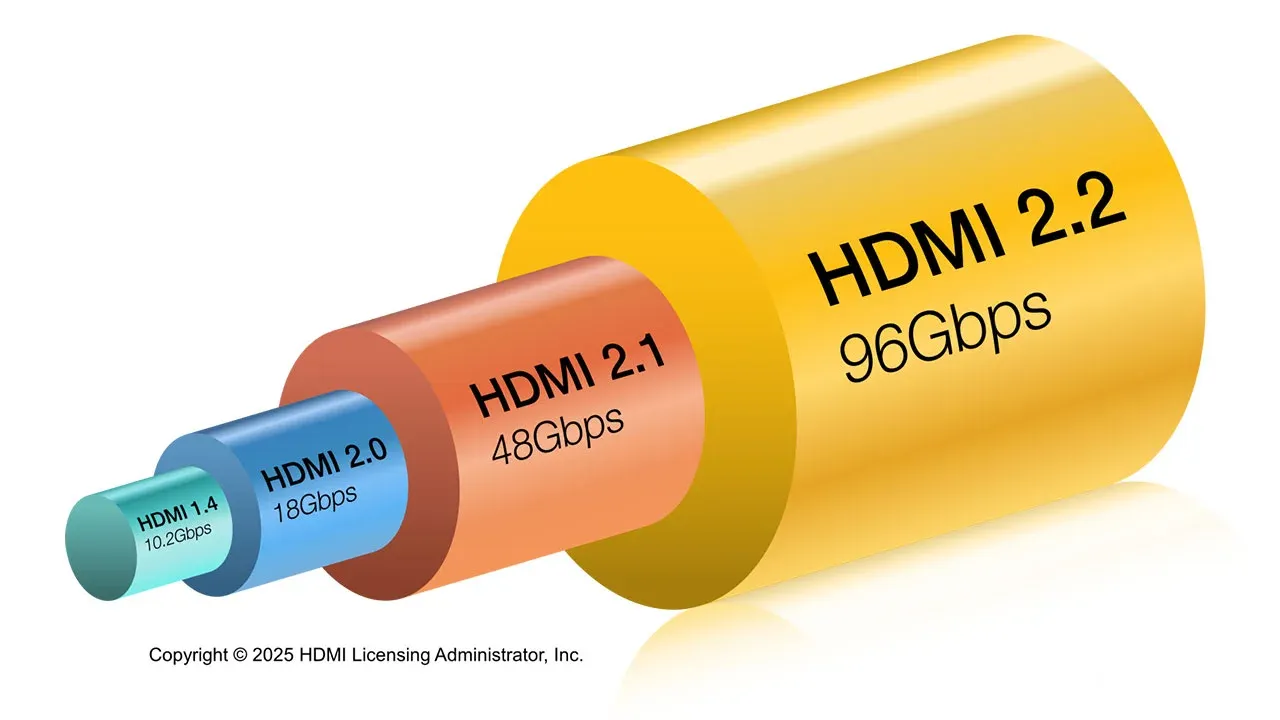
HDMI 2.1-era systems top out at 48Gbps, while HDMI 2.2 increases maximum bandwidth to 96Gbps using a newer generation of Fixed Rate Link technology. That additional bandwidth provides more room for extremely high resolutions, refresh rates and color depth.
HDMI 2.2 supports configurations including 4K at 240Hz with full 4:4:4 chroma and 10- or 12-bit color, along with uncompressed 8K60. With compression or chroma subsampling, the specification can support even higher combinations such as 4K480, 8K240, 10K120 and 12K120.
That does not mean a typical television suddenly needs to display 12K video. The extra bandwidth provides headroom for future gaming, professional video, immersive displays, medical imaging, machine vision and other data-intensive applications. HDMI Licensing Administrator specifically identifies AR/VR/MR, digital signage, medical imaging and machine vision among applications that can benefit from greater bandwidth.
HDMI 2.1 vs HDMI 2.2
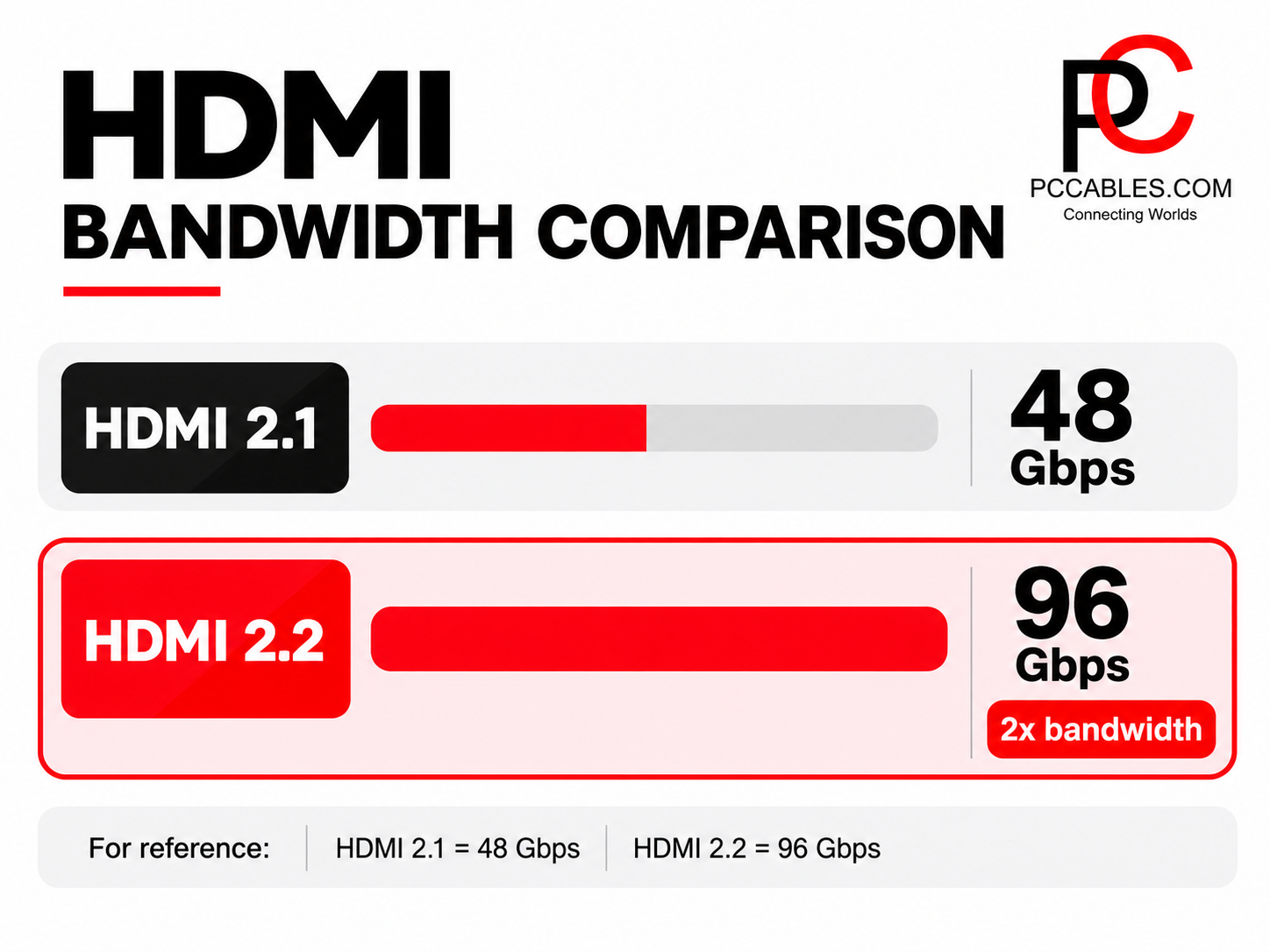
The easiest way to understand the change is to compare the maximum capabilities.
| Feature | HDMI 2.1-era capability | HDMI 2.2 |
|---|---|---|
| Maximum bandwidth | 48Gbps | 96Gbps |
| Common high-end target | 4K120 / 8K60 | Higher refresh rates and resolutions |
| Cable for maximum bandwidth | Ultra High Speed HDMI Cable | Ultra96 HDMI Cable |
| VRR, ALLM, QFT, eARC | Yes | Yes |
| New Latency Indication Protocol | No | Yes |
HDMI 2.2 retains features such as Variable Refresh Rate, Auto Low Latency Mode, Quick Frame Transport, Quick Media Switching and eARC while adding more bandwidth and a new Latency Indication Protocol, or LIP.
For systems that remain within the 48Gbps capabilities commonly associated with current high-end HDMI equipment, PCCables.com offers certified Ultra High Speed HDMI cables in several lengths.
What Is an Ultra96 HDMI Cable?
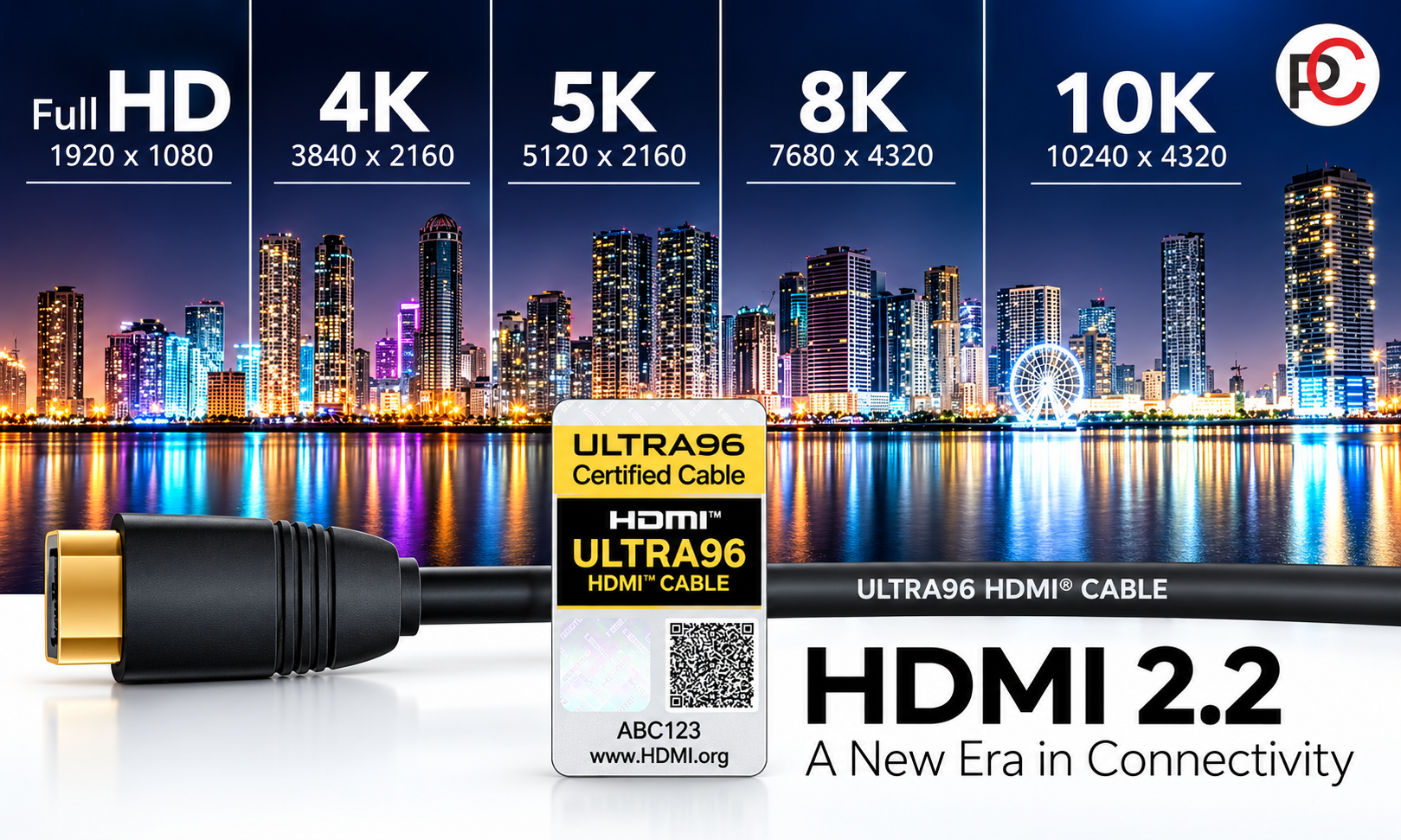
The new cable introduced alongside HDMI 2.2 is called the Ultra96 HDMI Cable.
It is certified for bandwidth up to 96Gbps and is designed to support the full range of HDMI 2.2 applications. HDMI Licensing Administrator says Ultra96 cables must pass its certification program and carry the official certification label, including security features that allow buyers to verify the cable.
The Ultra96 name can also appear on TVs, monitors, receivers and other equipment that supports maximum bandwidth levels of 64Gbps, 80Gbps or 96Gbps. If a device advertises the Ultra96 feature, an Ultra96 HDMI Cable is required to support that device's maximum advertised HDMI bandwidth.
An important naming detail is that HDMI's official cable categories are Ultra High Speed HDMI Cable and Ultra96 HDMI Cable. HDMI Licensing Administrator does not permit HDMI specification version numbers to be used by themselves to define or label cable products.
Do You Need an Ultra96 Cable Right Now?
For most current equipment, probably not.
Existing Ultra High Speed HDMI Cables are designed for systems requiring up to 48Gbps, including common configurations such as 4K120 and 8K60. HDMI 2.2 is also backward compatible with previous versions of the HDMI specification.
An Ultra96 cable becomes important when the source and display actually support a bandwidth level above 48Gbps or specifically identify an Ultra96 connection.
In other words, buying a 96Gbps cable will not make a 4K60 TV produce a better picture. The source device, display and cable all need to support the capabilities being used. This is where the distinction between maximum specification capability and practical need matters.
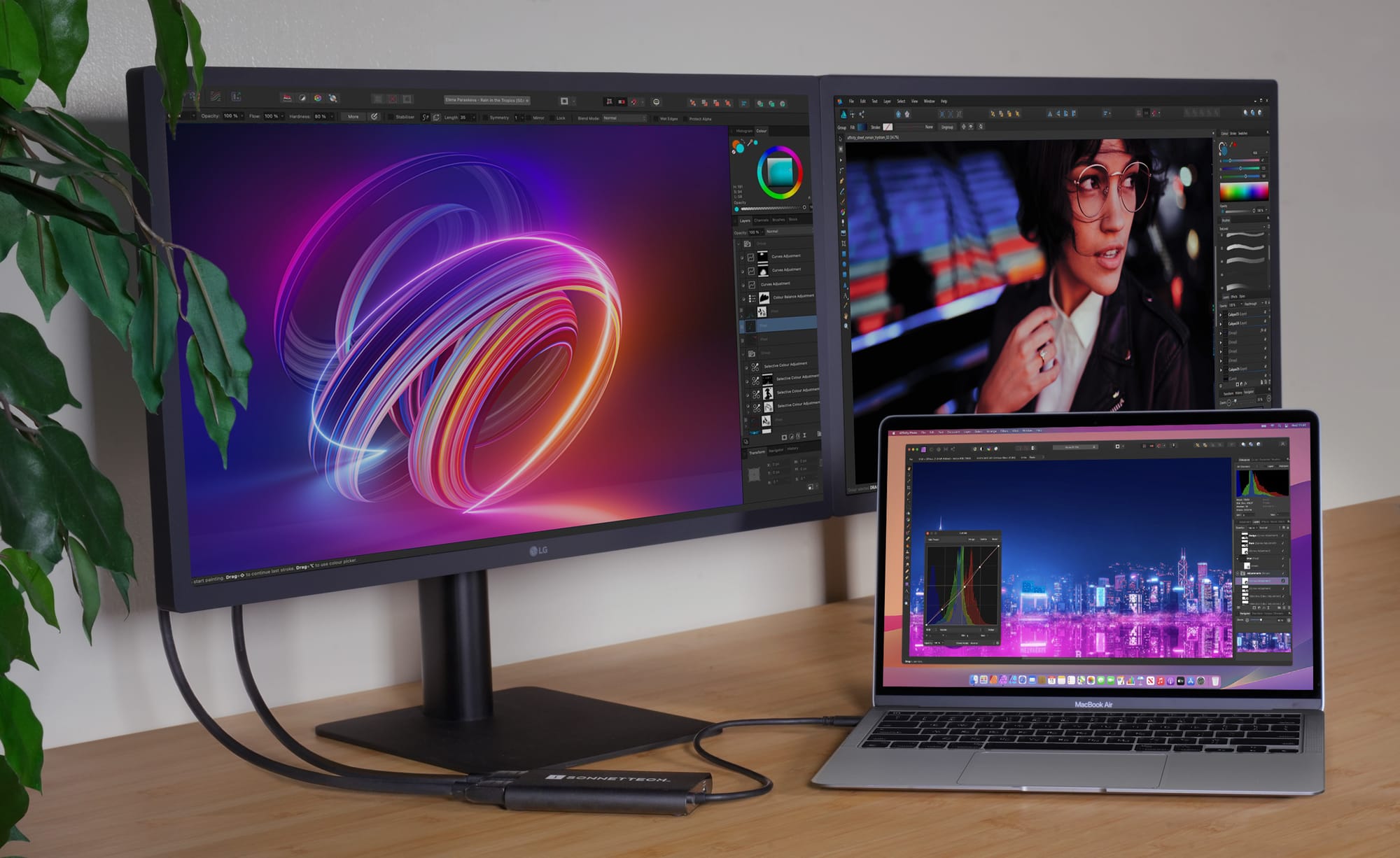
If your current display is not reaching the resolution or refresh rate you expected, the cable may not be the only factor. Our guide, Why Your 4K Monitor Might Not Actually Be Showing 4K, covers HDMI bandwidth, display settings, adapters and other common limitations that can affect 4K output.
 Hunter
What Happens to Existing HDMI 2.1 Equipment?
Existing equipment does not suddenly become obsolete.
An HDMI 2.1-era television, game console or AV receiver will continue operating according to the capabilities it already supports. HDMI 2.2 was designed to remain backward compatible with earlier HDMI specifications.
Likewise, an existing 48Gbps Ultra High Speed HDMI Cable remains appropriate for system configurations requiring no more than 48Gbps.
PCCables.com currently carries 48Gbps Ultra High Speed HDMI cables for current-generation systems, including models intended for 4K120 and 8K60 applications.


What Is HDMI Latency Indication Protocol?
Bandwidth is not the only new feature.
HDMI 2.2 introduces Latency Indication Protocol, or LIP, which allows connected HDMI devices to exchange latency information. This feature improves synchronization between audio and video, particularly in systems where the signal passes through multiple devices such as an AV receiver or soundbar.
That could become increasingly useful as home theater setups include more processing between the source and display.
HDMI 2.2 also continues support for gaming-oriented features including VRR, ALLM and QFT, so the specification is not abandoning the features introduced with the previous generation.
Does HDMI 2.2 Mean 16K TVs Are Coming?
HDMI 2.2 provides enough bandwidth for extremely high-resolution formats, including combinations reaching 12K120 and 16K60, but specification support does not mean those resolutions are about to become normal consumer television formats.
A more immediate benefit is additional bandwidth for higher refresh rates, full chroma, higher bit depth and professional or specialized display applications.
For gaming displays, for example, increasing refresh rate can consume bandwidth quickly even if resolution stays at 4K.
This is why the jump from 48Gbps to 96Gbps matters even without everyone buying a 16K television.
Can You Use an Ultra96 Cable With Older HDMI Equipment?
Yes.
HDMI Licensing Administrator states that Ultra96 HDMI Cables are backward compatible with existing HDMI devices. An Ultra96 cable can therefore be used with older equipment, although the connection will still be limited by the capabilities of the devices involved.
The reverse question is more important. An existing Ultra High Speed HDMI Cable can still be used in configurations requiring up to 48Gbps, but equipment using HDMI 2.2 bandwidth above that level requires an Ultra96 cable to access its maximum capability.
Should You Upgrade for HDMI 2.2?
For most buyers, HDMI 2.2 should not be the deciding factor when choosing a TV or monitor today. The more important questions are whether the display supports the resolution, refresh rate and features you actually plan to use.
Existing Ultra High Speed HDMI cables remain appropriate for connections requiring up to 48Gbps, including common 4K120 and 8K60 setups. An Ultra96 HDMI Cable becomes necessary only when compatible HDMI 2.2 equipment needs bandwidth above 48Gbps.
HDMI 2.2 is backward compatible with earlier HDMI equipment, so existing devices and cables do not suddenly become obsolete. When upgrading, check the specifications of the source device and display rather than assuming the newest cable will improve performance.
Going forward, HDMI 2.2's 96Gbps bandwidth, Ultra96 certification and higher resolution and refresh-rate support will matter more as compatible TVs, monitors, graphics hardware and professional AV equipment become more common.


For current systems that remain within 48Gbps, existing Ultra High Speed HDMI cables are still relevant. PCCables.com continues to support current HDMI installations with 48Gbps Ultra High Speed HDMI cables, adapters, extensions and other display connectivity products, while HDMI 2.2 and Ultra96 begin expanding into newer hardware.
Frequently Asked Questions
Is HDMI 2.2 better than HDMI 2.1?
HDMI 2.2 supports substantially more maximum bandwidth, increasing from 48Gbps to 96Gbps. Whether that produces a practical benefit depends on the source and display.
Do I need a new cable for HDMI 2.2?
Not always. Existing Ultra High Speed HDMI cables remain suitable for system configurations requiring up to 48Gbps. Connections requiring HDMI 2.2 bandwidth above 48Gbps need an Ultra96 HDMI Cable.
What is Ultra96?
Ultra96 is the HDMI feature name used for products supporting maximum bandwidths of 64Gbps, 80Gbps or 96Gbps under HDMI 2.2. Ultra96 HDMI Cables support up to 96Gbps.
Does HDMI 2.2 support 4K at 480Hz?
The HDMI 2.2 specification provides combinations that can reach 4K480 using compression or chroma subsampling. It also supports uncompressed full-chroma formats such as 4K240 at 10- and 12-bit color.
Is HDMI 2.2 backward compatible?
Yes. HDMI 2.2 is backward compatible with earlier HDMI specifications, and Ultra96 cables can be used with existing HDMI devices.
Stay Connected as HDMI Evolves
HDMI 2.2 pushes the standard forward with 96Gbps bandwidth and Ultra96 cables, but most current TVs, monitors and gaming systems can still be served by existing 48Gbps Ultra High Speed HDMI connections.
For current setups, PCCables.com carries HDMI cables, adapters, extensions and other display connectivity products for 4K, 8K and other applications.
If you are troubleshooting an existing 4K setup, see our guide Why Your 4K Monitor Might Not Actually Be Showing 4K. You can also visit the PCCables.com Blog for more guides on cables, connectors and changing connectivity standards.

See more of our blog posts here!


Check out our website for all your cable needs!